
By Pam Dewey
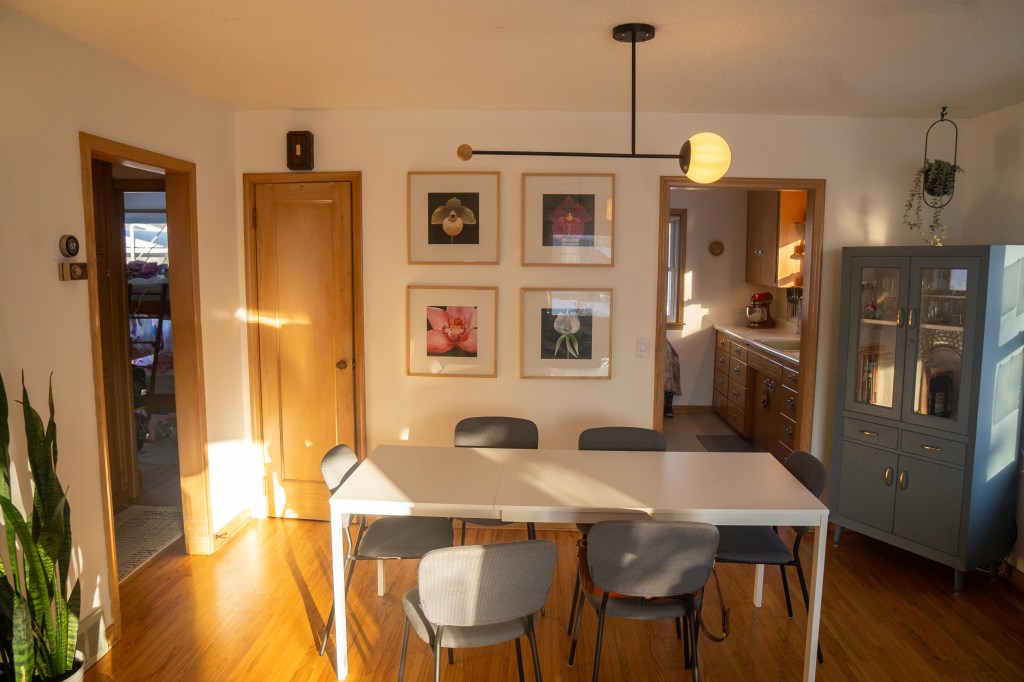
Dan’s dining room is warm, welcoming, and a little mid-century modern.
Dan Sterner has been thrifting regularly for over 10 years. He first got hooked when he was living in Madison, WI, and had just received his graduate degree in architecture.
“I went to Goodwill because I was looking for pants to wear to work,” Dan says. “I was surprised to discover some really good house items there. From then on, I started going regularly.”
Now, Dan does much of his thrifting from home, while scrolling on his phone.
“Facebook Marketplace has changed the thrifting experience. It makes it so much easier,” says Dan. “It is kind of addicting. I scroll through Marketplace most mornings while I drink my coffee.”
Finding just the right piece feels like uncovering a treasure.
“There is—for people who thrift—some joy in trying to find things. And then that moment of, ‘I can’t believe I found that.’ There’s a little bit of geekiness to that, too,” says Dan.
Here are a few tips from a self-described thrift geek.
Know your aesthetic
Dan recommends figuring out your aesthetic, or preferred interior design style. He describes his style as California modern meets mid-century. For Dan, that means he likes furniture with clean lines and a more neutral palette in beiges, light blues, and tans. He also looks for pieces that resemble something from West Elm and Room and Board, a Minneapolis-based store with high quality furniture and décor that balances “modern lines with timeless details.”
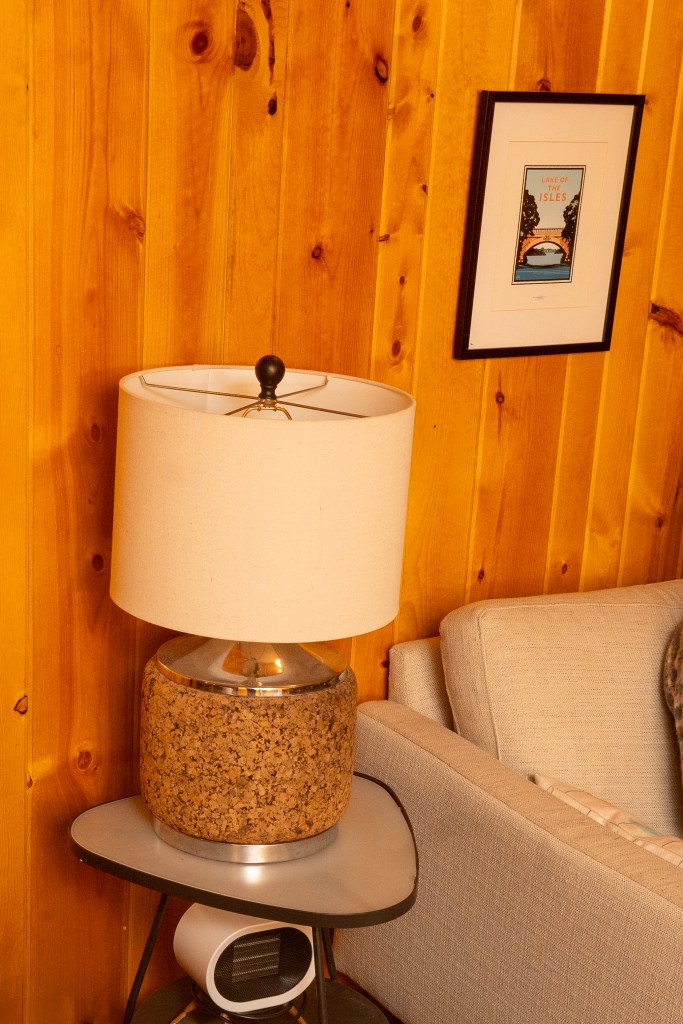
The cork lamps in Dan’s basement are a timeless style, picked up at the thrift store.
If you’re unsure of your style, pick out some of your favorite pieces in your space or a friend’s space. Perhaps you’re drawn to bright colors and unusual shapes. Maybe you love toile, velvet drapes, and chandeliers, or you’re all about buffalo check and wood paneling. Of course, you might prefer an eclectic style, which would combine many styles.
Consider the style of your space
After you’ve figured out your style, think about how a piece will look in your space. When Dan lived in Madison, he lived in an apartment, and his style was more of an industrial loft look.
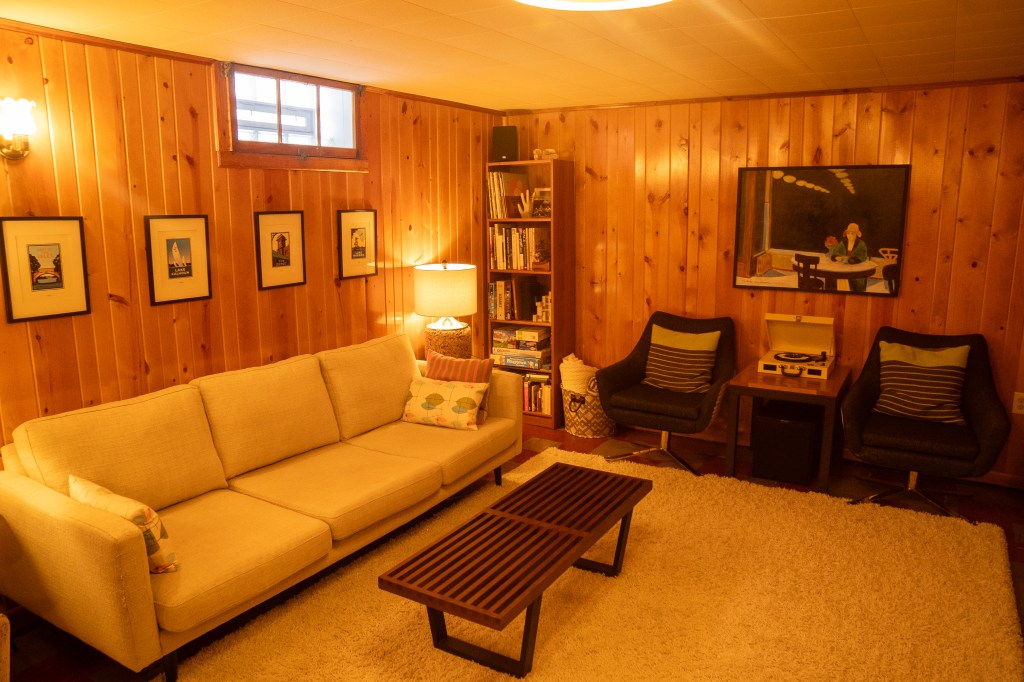
Dan choose to lean into the mid-century style of his house.
He bought his mid-century rambler in Minneapolis in 2022. There are original details like an avocado green stove, a wood-paneled basement, and huge picture window in the front. He loves many of the original details, including the avocado green stove, so he’s adapted his style to fit the space.
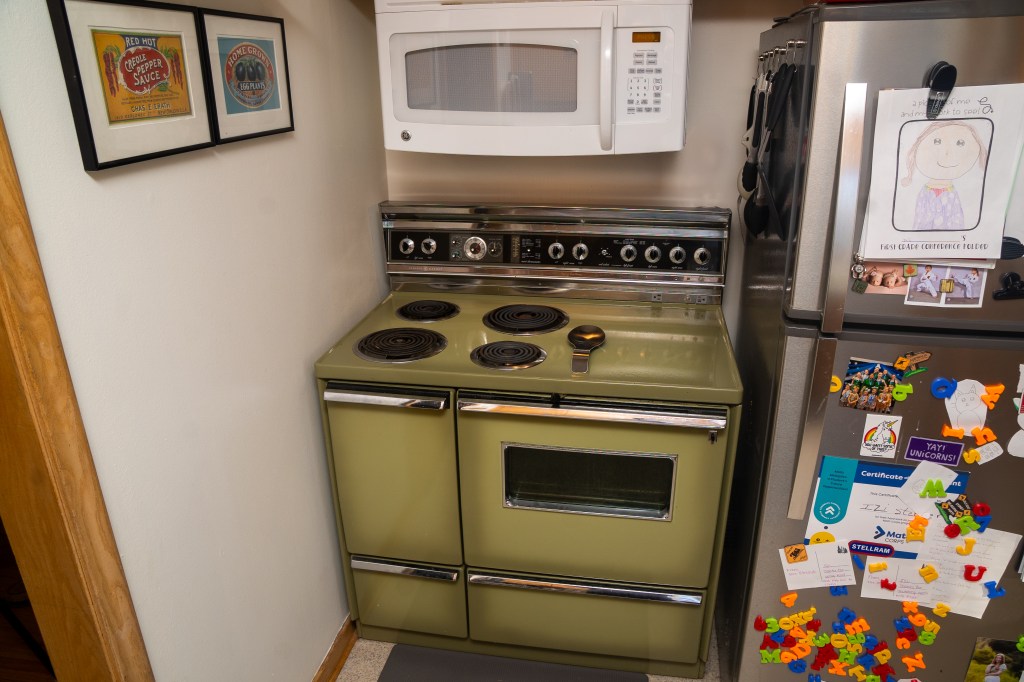

Dan kept his original avocado green stove and cabinets and added some geometric pots.
Design over names
While Dan looks for pieces from West Elm and Room and Board, he’s not going to bring home a piece of décor or furniture just because it carries those brand names. He’s a firm believer in good design over brand names.
His entertainment center in the basement is a classic mid-century modern style, but it’s from Target. His deep blue lounge chairs with the chrome base, look like Eames or maybe Herman Miller, but he purchased them from a hotel on Marketplace.
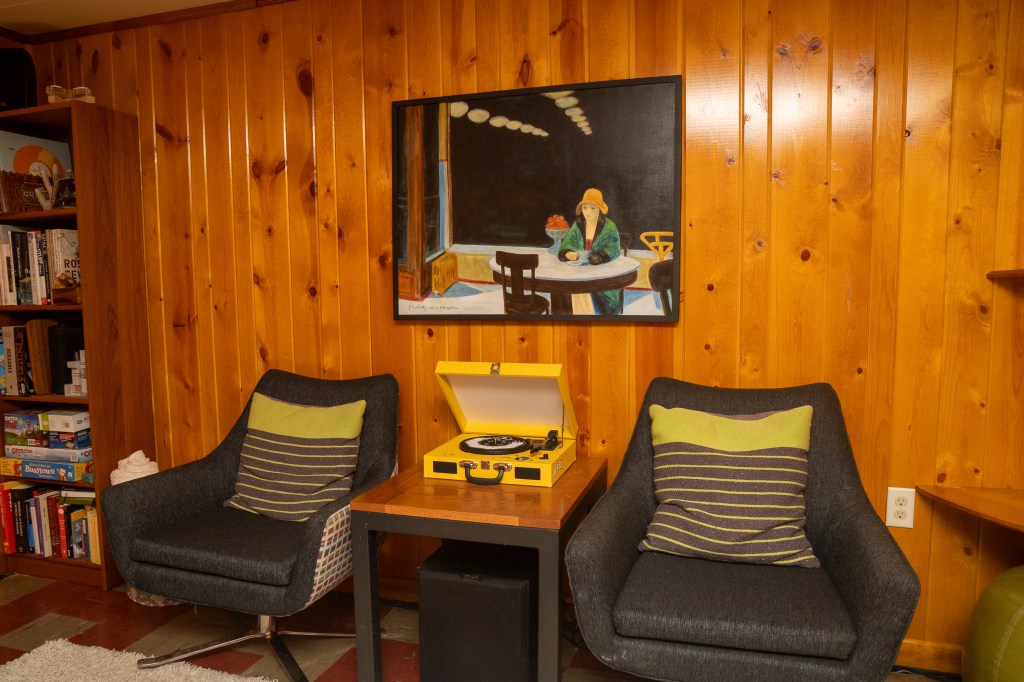
Dan picked up these chairs for their mid-century modern style.
Get creative and re-imagine
Dan also suggests you try re-imagining pieces from their original use. The “china cabinet” in his dining room is an old medical cabinet. It now houses Dan’s glassware, cookbooks, and other serving ware. He painted the metal cabinet a cornflower blue, added feet, and switched out the pulls.
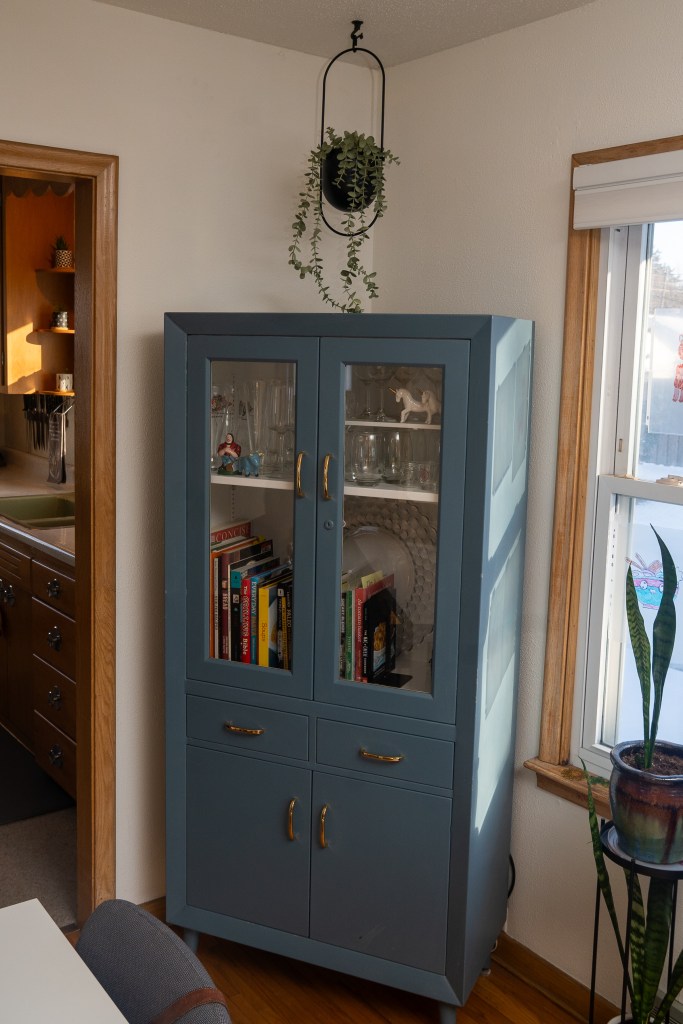
Dan updated this old medical cabinet with paint and new pulls.
Interior designers do this all the time. Designer Leanne Ford has created some truly stunning and unusual chandeliers out of things like old rope or fishing baskets. Turn an old wicker hamper upside down, and suddenly, you’ve got a boho plant stand on the cheap.
You can refinish pieces, no really
Thrifted furniture often isn’t in the best shape. There might be scratches, missing finish, water rings or cracks. Trying to refinish these blemishes might seem intimidating, but there are tips and tricks online—not to mention—videos to guide you through the process. There are also an abundance of products specifically created to refinish furniture.
Dan found his living room entertainment center on Marketplace. It wasn’t in the best shape, but it was all real wood—no fiberboard—and the style was classic mid-century modern. He had a vision: darker walnut on the sides for a waterfall look and a lighter stain on the front. He googled inspiration photos and experimented with wood stain on some scrap pieces of wood.

You can refinish solid wood pieces with a little bit of elbow grease, like Dan did with this entertainment center.
Picking the right sandpaper is also important to refinishing, says Dan. Grits go as low as 24 grit to up over 1,000 grit. Be careful if you’re using an orbital sander, as these can leave divots if you’re using too harsh of a grit or not moving the sander enough. If you’ve never refinished furniture before, consider hand sanding because gives you more control.
To remove the finish from furniture, Home Depot recommends starting with 80-grit sandpaper. Then, once you’re ready to stain or paint, switch to 100-150-grit sandpaper to remove any remaining scratches or rough patches. Depending on your project, switch to a much lighter grit, like 400-800, between coats of poly or paint to smooth out any bubbles or runs.
“Also, hardware, like pulls and knobs, can completely change the look of piece,” says Dan.
 Behind the Shade MN