As someone who considers herself a maximalist, I’m here to assure you there’s absolutely nothing wrong with being a maximalist. Homes of maximalists are usually interesting and unique because maximalists bring in furniture and décor from different styles, eras, and places.
Most maximalists are collectors, often of more than one type of item. The downside of being a collector is that there’s a tendency to continue building that collection. Sometimes, that means your collection takes over your house, and it becomes unmanageable. That’s when perhaps donating or organizing your items becomes necessary.
But where to get started? It can feel overwhelming. That’s where experts like Valerie Ruha, a professional organizer and owner of Very Organized by Valerie, can come in. Valerie has enjoyed organizing her whole life and started doing it full-time 4 years ago. She’s a member of the National Association of Productivity and Organizing (NAPO) and has a certificate in Residential Organizing.
“Being an organizer is what I was meant to do. It’s truly my dream job, and I couldn’t be happier,” says Valerie. “When I can put a smile on someone’s face or have them breathe a sigh of relief after living in chaos too long, it’s the best feeling.”
Here are a few tips from Valerie to help you keep your clutter at bay.
Figure out what’s valuable to you
When you start collecting—whether it’s a doll collection, souvenirs from travel, or a record collection—you want to continue adding more. You may even feel like you HAVE to add more pieces to your collection. That’s when the collection becomes more about how many pieces you have, rather than how many great pieces you have. That’s where an organizer like Valerie can come in.
“With people with large collections, I try to help them figure out what is truly precious to them,” says Valerie.
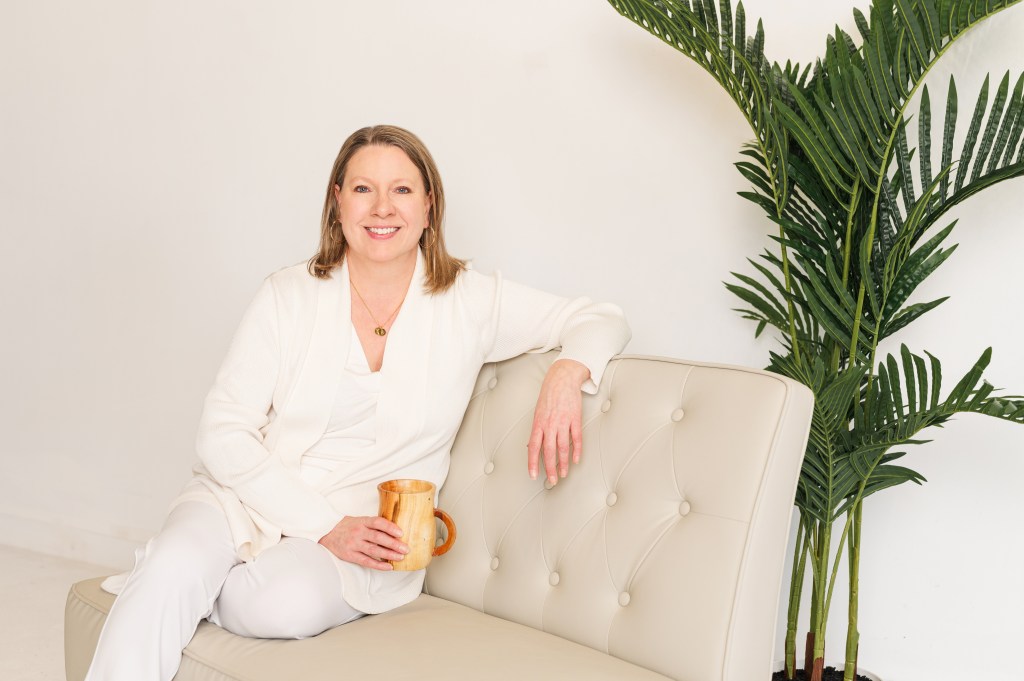
Professional Organizer Valerie Ruha of Very Organized by Valerie
Precious items often have a sentimental attachment. Maybe you’re attached to the first record you ever bought or a record with the song that played at your wedding. These are important mementos of good times in your life, so holding onto them makes sense. But holding onto a record just because it completes the catalogue for a band, maybe isn’t as necessary.
Give your items to others
Perhaps you’ve been amassing milk glass pieces, and you realize you have more than you could ever hope to display or use. Holding onto something just to have it doesn’t make a lot of sense, particularly if the item is just sitting in a box, unused and unadmired.
When this happens, Valerie often encourages clients to consider giving some of their collection to friends or family. Just remember to ask first before thrusting items on a loved one.
“People think that their kids want all their stuff, but generally, their kids don’t want all of their stuff,” says Valerie.
Gifting unwanted items then becomes a burden for the receiver because they may feel bad getting rid of them.
Donating your items is also a possibility. There are a variety of organizations that accept different types of donations like Arc’s Value Village, Goodwill, The Salvation Army, and Habitat for Humanity ReStore. Some places like the Disabled American Veterans of Minnesota will also pick up donated items.
Get rid of blind clutter
Many of us have what Valerie calls blind clutter. Blind clutter is clutter we’re used to seeing because we live in our homes and see it all the time.
“This type of clutter isn’t a shocking change that happens overnight, so you kind of grow immune to noticing it,” explains Valerie. “But I come in with fresh eyes, and I notice these things and can help you edit a few things out.”
So how do you get rid of blind clutter if you’re not ready to enlist an organizer like Valerie? Look for lingering stacks on the counter, table, or items piled or stuck where they’re out of place. Maybe you have stuffed a magazine down the side of the couch, a bunch of old kids’ artwork hung on the fridge, or a stack of unopened mail sitting on the dining room table.
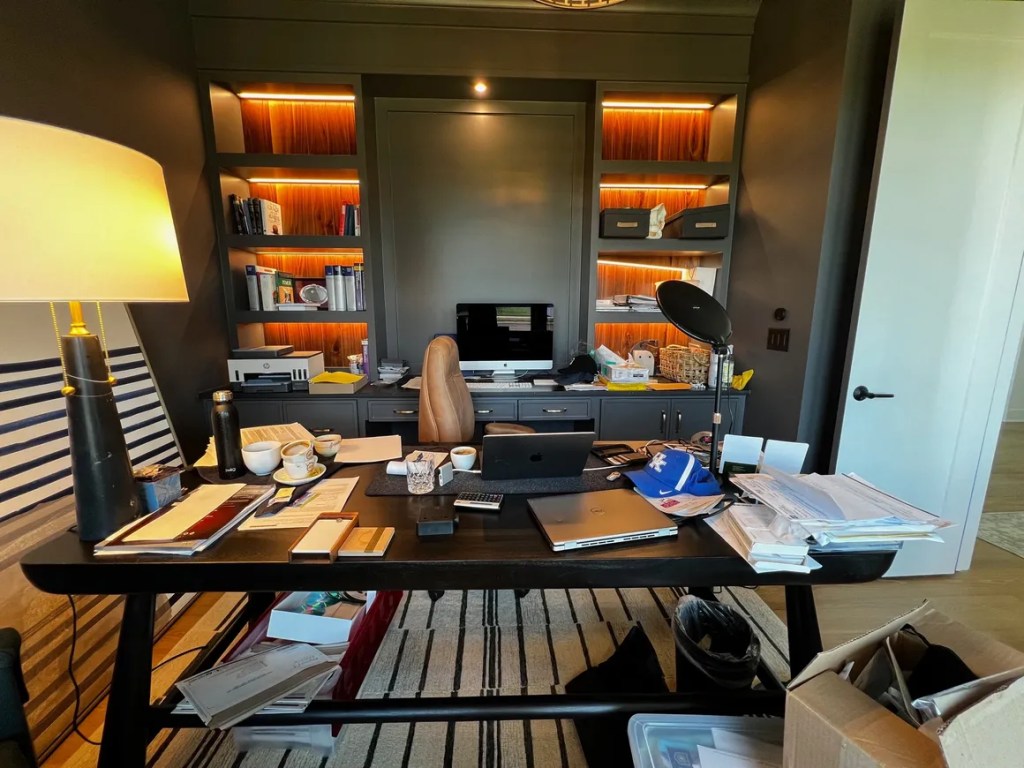
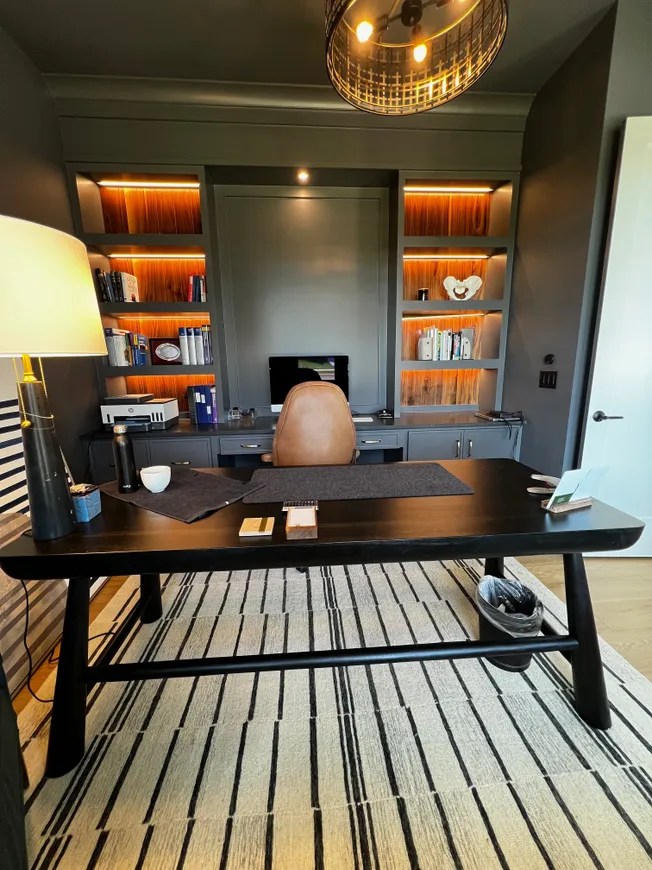
An office of one of Valerie’s clients. Before on left and after on right. Image from Organized by Valerie
The good news is that many blind clutter are items are easy and fast to fix, once you start noticing them. You might also need to create a place for these items, like an organizer for the mail, a magazine rack for your periodicals, or even just set a reminder to clear off the items hanging on the fridge every month.
Get things out of boxes
Valerie often helps people go through things that have been sitting in boxes for years. Many times, people have forgotten what is even in the boxes. By opening up the boxes, you can evaluate whether the items deserve to be saved or not.
“It’s important to get out the stuff that means the most to us,” says Valerie. “Display anything that helps you remember the parts of your life that you’ve loved the most.”
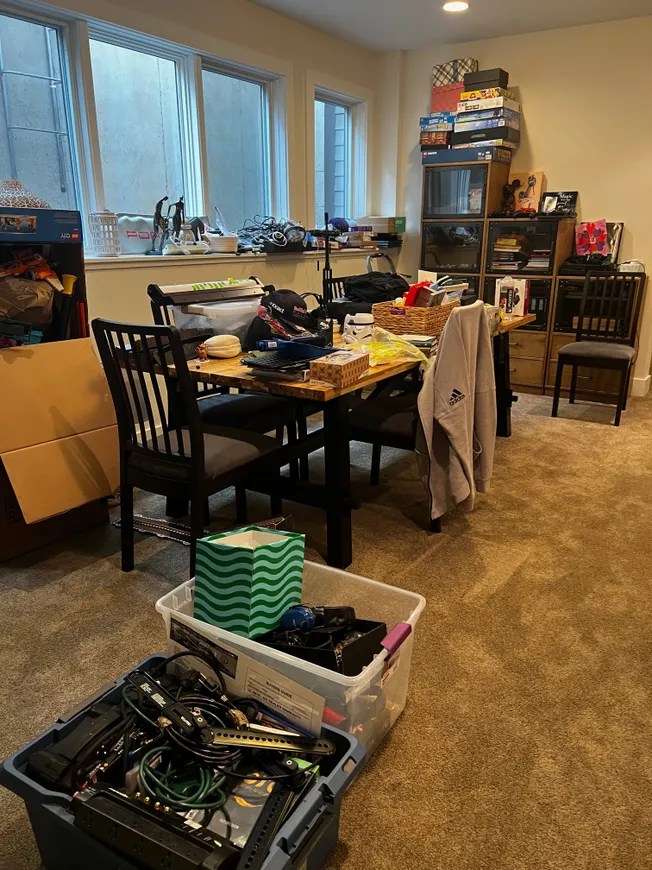
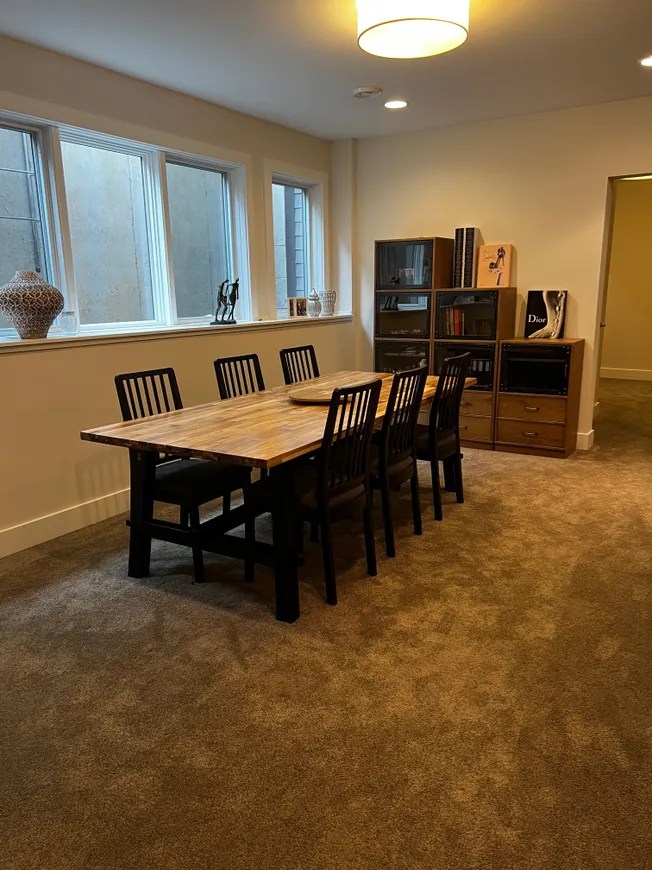
One of Valerie’s clients’ dining room. Before on left and after on right. Image from Organized by Valerie
Create a designated collection space
Sometimes, Valerie helps customers install cabinets, shelving systems, or closet organizers. These organizational items create a distinct space for everything.
When organizing a collection, she finds it best and most impactful to put a collection in one central location. A collection of vintage paint-by-numbers paintings will have much more visual impact when it’s displayed together, all on one wall. The same is true for a collection of vintage goblets or brass figurines. So, once you’ve narrowed down your collection to your favorite pieces, find a good piece of display furniture like a china cabinet, a bookshelf, or maybe install a set of floating shelves.
Design systems that work for you
Valerie also specializes in working with people who are neurodivergent, like those with ADHD and/or autism. Neurodivergent people may need to display their collections differently to feel satisfied.
Valerie worked with a 20-year-old man who was autistic and had ADHD. He lived with his parents, and they’d tried and failed to get him to clean up his room. He liked to put together robots, and the mess had gotten so bad that you couldn’t see his floor anymore.
Valerie realized the problem with previous organization attempts was that he didn’t like having his robots hidden away. So instead, they bought clear shelving units with pull-out drawers that were also clear. That way, his robots were put away, but he could still see them and sort them by color or type of robot.
Organizing his collection this way inspired the young man to keep his room clean and remove garbage on a regular basis.
Of course, clear bins aren’t for everyone. Perhaps you prefer to have items put away in baskets, drawers, or behind the closed door of your closet. Find what feels right for you.
Maintain your organization
That brings me to Valerie’s last piece of advice: maintaining your organization is an ongoing project. Once you get organized, you must continue to use your organization system.
“I always tell people, don’t put down; put it away,” says Valerie. “You have to find homes for everything, and then you have to put it back in its place.”
 Behind the Shade MN
Leave a comment